
The Happiness Trap
Why the Authenticity Kayfabe is Exhausting Your Customers

Everything is a performance right now.
Scroll through any brand feed and you will find the same tired script. The scrappy founder with the perfectly color-graded three-camera setup. The artisanal coffee brand that turns out to be a subsidiary of a multinational conglomerate.
The wellness company urging you to “live your best life” in a voice so relentlessly upbeat it feels like a hostage video. (We have all seen it. We have all muted it.)
This is what I call the happiness trap, and it is built on a lie. For years, the industry has operated on a simple theory: overwhelm the senses, trigger a dopamine hit, and the customer falls in love. Brighter lights, louder music, bigger unboxing moments. The problem? Brains adapt. That serotonin rush from a perfectly choreographed retail experience dulls after the third identical encounter. Suddenly you need a bigger hit to feel anything at all. This is the happiness treadmill, and most consumers are exhausted from running on it.
But the exhaustion runs deeper than overstimulation. The real damage comes from manufactured authenticity. When every brand performs vulnerability, relatability, and joy on demand, people stop believing any of it. The brain switches into threat detection mode. Your customer is just trying to find a decent hotel or a moisturizer that works. Instead they are stuck playing detective, trying to figure out if your backstory is real or if your “messy, relatable” aesthetic is a calculated corporate strategy. That mental effort has a name: cognitive load. And when parsing the truth takes too much work, the brain simply checks out.
Here is the thing about brains. They run on a tight energy budget. You want your customer spending that energy on your product. When you force them to interrogate your sincerity, you divert their processing power away from the actual transaction.
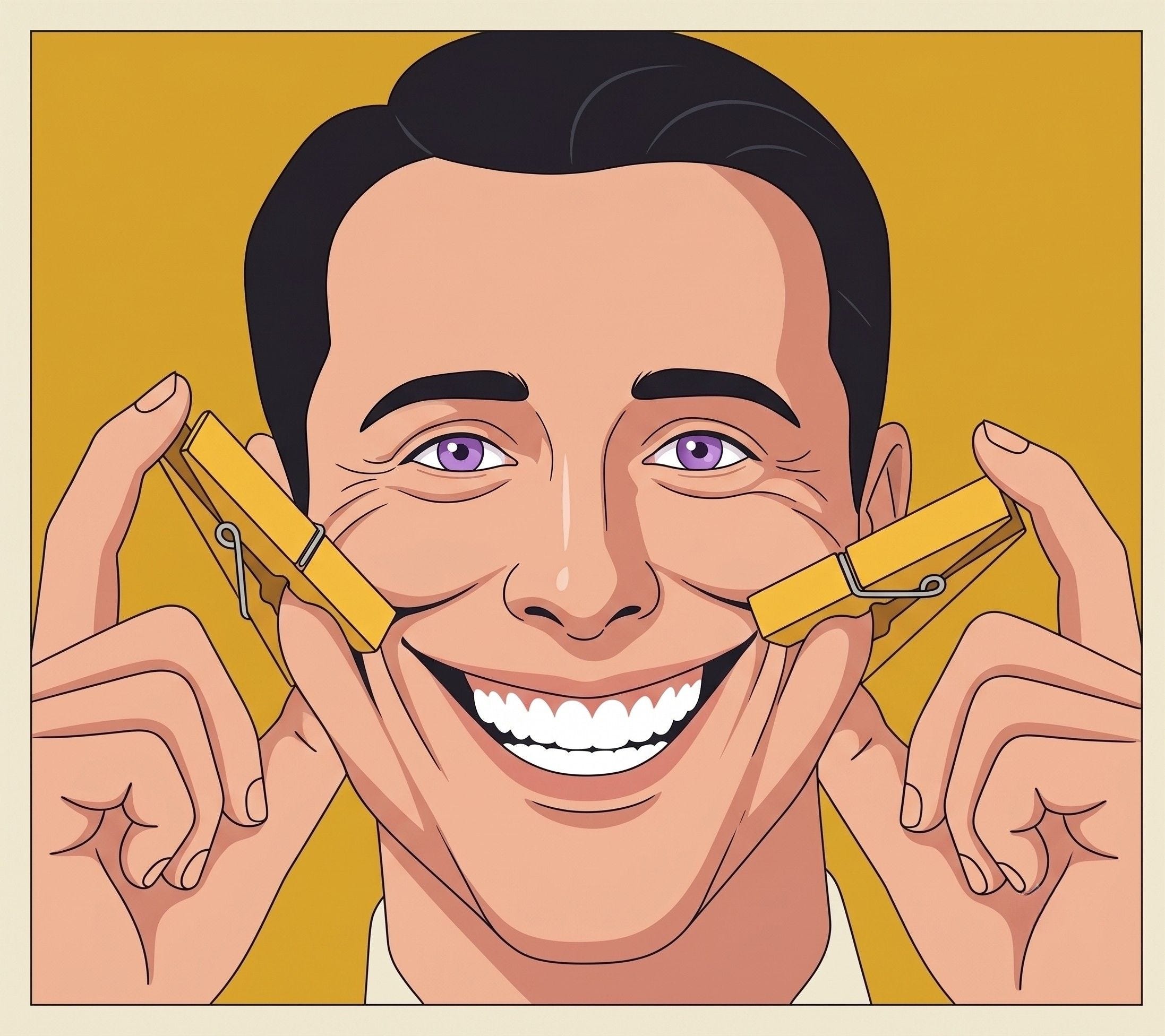
The result is apathy instead of loyalty.
The fake startup origin story and the confetti cannon unboxing are the same problem. Both ask the customer to suspend disbelief, and both leave them feeling manipulated.
So what is the fix? I would argue for something called sustainable happiness. (Yes, it sounds like a wellness podcast, but stay with me.) Psychologist Catherine O’Brien defined this as happiness that contributes to individual and community well-being without exploiting people or the planet. In plain English: stop selling temporary highs. Stop performing emotions you do not feel. Start building experiences that respect the full emotional spectrum.
This means embracing honest artifice. Customers do not hate being marketed to. They hate being lied to. If you are a massive corporation, own the polish. High fashion does not pretend to be your buddy from the garage. It offers a fantasy and owns the stagecraft. A beautifully executed, unapologetically slick experience is currently trusted more than a faux-scrappy one because it is honest about its intentions. The mask is only offensive when you pretend you are not wearing one.
It also means prioritizing competence over forced relatability. The parasocial best-friend act has run its course. Your customer does not need you to be their vulnerable best friend. They need you to be excellent at what you do. Strip out the cutesy conversational microcopy and replace it with clarity. Lower cognitive load by making the experience predictable, reliable, and frictionless. Trust is built through coherence, not confession.
Design for sensory alignment. If your brand is genuinely scrappy, let the customer experience reflect real constraints. If you operate at scale, lean into the efficiency that scale allows. Brains genuinely enjoy harmony. When your narrative, your interface, and your physical reality all point in the same direction without contradiction, the customer feels safe. Safety is the real luxury good right now.
And here is the part most brands miss: design for quiet. In a culture obsessed with extroversion, we have forgotten that roughly half the population recharges through solitude. Quiet corners in retail spaces. Digital platforms that encourage reflection rather than endless scrolling. Customer journeys that include pause points for decision making. These are hardly anti-social design choices. They are respectful ones. Introspective states activate the brain’s default mode network. When a brand facilitates genuine reflection, it lodges itself in long-term memory far more effectively than any flash sale.
Think about the brands that actually earn your loyalty. They rarely shout. They invite you to slow down, to learn something, to belong somewhere.
A yoga studio that makes room for silence.
A skincare brand that turns a nightly routine into a ritual.
A travel company that designs trips around immersion rather than Instagram backdrops. These brands understand that purpose, relationships, and personal growth generate far deeper attachment than another manufactured peak moment.
So here is the playbook. Artificial positivity had a good run. The fake vulnerability had a good run too. But the returns have diminished and the audience has checked out. The brands that win will be the ones brave enough to embrace emotional complexity. They will design for the full human experience: the quiet, the curious, the frustrated, and the calm.
Happiness is not a product you can manufacture on demand. It is a byproduct of feeling understood. Start there, and the loyalty follows.